


What To Do In Freezing Temperatures in South Carolina
When You’re in a Bind, Call Vines!

3495+ 5 Star Reviews

Give Us A Call


In South Carolina, we are used to sunshine, sweet tea, and mild winters. However, every few years, a true Arctic blast makes its way down to the Palmetto State, sending temperatures plummeting below freezing. In a region where homes are often built to stay cool rather than withstand deep freezes, these cold snaps can significantly strain your home’s comfort system. When temperatures drop into the teens or twenties, your plumbing and HVAC systems enter a high-stress environment that requires proactive care to prevent costly damage.
At Vines Heating & Air, Plumbing, Restoration, we have been the Grand Strand’s trusted experts since 1965. We have seen firsthand how a single night of freezing weather can lead to burst pipes, flooded basements, and failing heaters. This guide is designed to help you navigate a South Carolina freeze with confidence, showing you exactly how to protect your home and what warning signs to look for when the cold sets in.
Protecting Your Plumbing: The Open Cabinet Rule
In the South, plumbing is often located in areas vulnerable to cold, such as exterior walls, crawlspaces, or unheated attics. When water freezes, it expands by about 9 percent, creating thousands of pounds of pressure inside your pipes. If that pressure has nowhere to go, the pipe will burst.
The Power of Air Circulation
One of the simplest and most effective ways to protect your indoor plumbing is to open the cabinet doors under your kitchen and bathroom sinks.
- Heat transfer: Most cabinets function as insulated boxes that keep the home’s warmth away from the pipes. By opening the doors, you allow ambient heat reach the plumbing, keeping the water above the freezing point.
- Exterior walls: Pay special attention to sinks located on exterior walls. These are the most likely to freeze because they are closest to the freezing outdoor air and often have less insulation behind them.
Should You Drip Your Faucets?
In South Carolina, the answer is usually yes. While you don’t want to waste water, a slow, steady drip can be the difference between a dry home and a flood.
- Relieving pressure: A dripping faucet is not just about keeping water flowing; it is about providing a pressure outlet. If ice begins to form in the pipe, the drip allows the displaced water to exit the system rather than building up until the pipe snaps.
- The “farthest” faucet: If you only drip one faucet, choose the one farthest from where the main water line enters your home. This ensures water flows through the largest portion of your plumbing system.
What to Do About Ice on Your HVAC Outdoor Unit
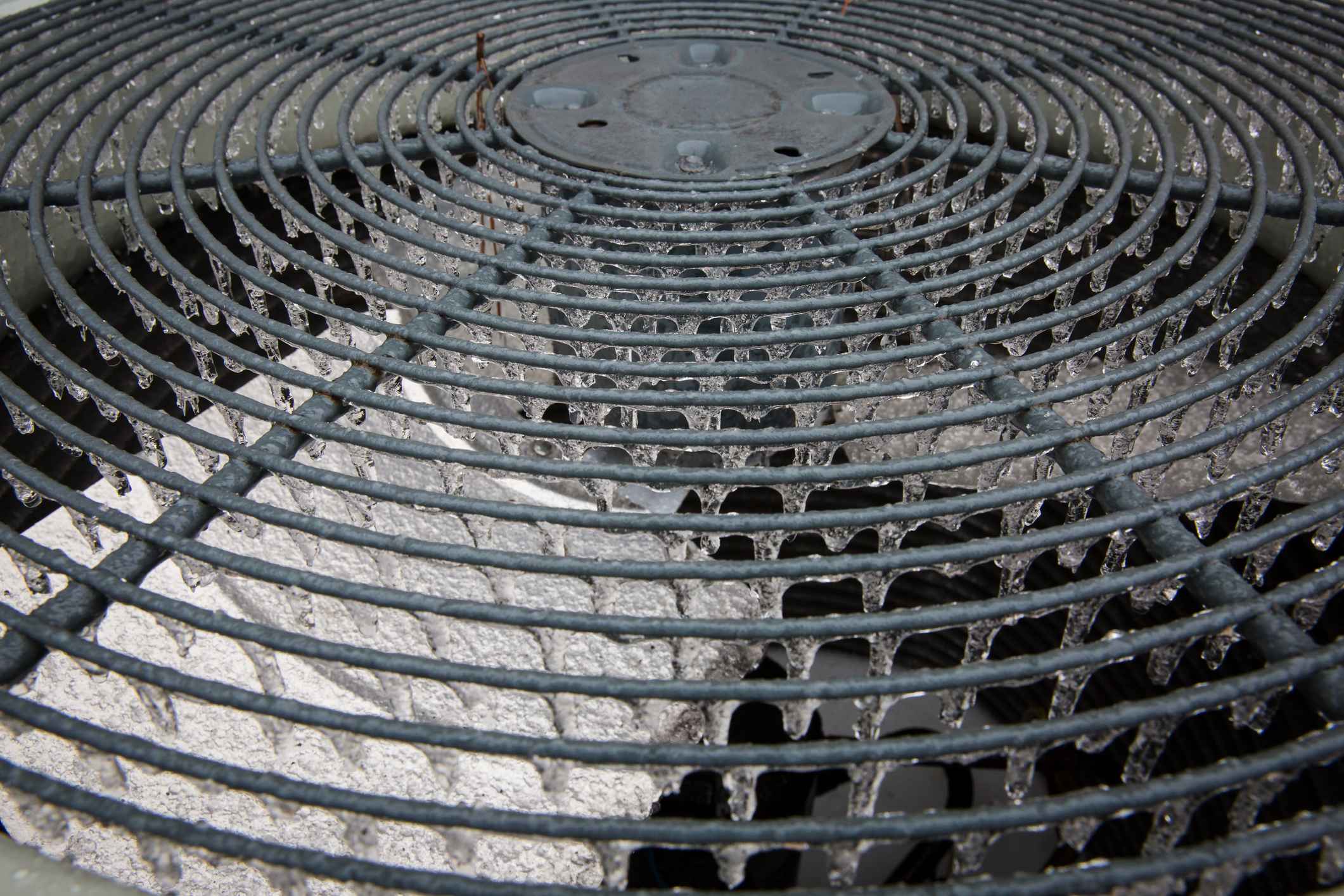
If you have a heat pump, it is perfectly normal to see a light dusting of frost on the outdoor coils during a cold morning. Heat pumps are designed to enter a “defrost cycle,” in which they temporarily reverse their operation to melt the frost. However, if your unit starts to look like a solid block of ice, you have a problem.
Do Not Scrape or Chisel
The most important rule when dealing with a frozen HVAC unit is to keep your tools away from it.
- Delicate fins: The aluminum fins on your outdoor unit are extremely thin and fragile. If you try to scrape ice off with a shovel or chisel, you will likely flatten the fins or puncture the refrigerant coils, turning a minor defrost issue into a total system replacement.
- The hose method: If you need to melt ice, gently run cool water from a garden hose over the unit. Never use boiling or hot water, as the sudden temperature change can cause “thermal shock” and crack the internal components.
When to Call Vines
If your unit stays encased in ice even after a few hours of operation, it usually indicates a failure of the defrost board or a low refrigerant level. If the ice is thick enough to stop the fan from spinning, turn the system off immediately and call for a professional diagnostic to prevent the motor from burning out.
Warning Signs: Hearing and Seeing Water
One of the most dangerous aspects of a freeze-thaw cycle is that you may not know a pipe has burst until the ice inside it melts. If you see or hear water where it shouldn’t be, you must act quickly.
The Sound of a Leak
If your home is quiet and you hear the sound of running water, hissing, or a steady “drip-drip” inside your walls or in the crawlspace, you likely have a burst pipe.
- The gurgle: If your toilets are gurgling or your drains are backed up, the cold may have affected your sewer line or vent stacks.
- The hum: If you hear your well pump or water heater running constantly when no one is using water, it is a sign that water is escaping from the system somewhere you can’t see.
Visible Indicators of Trouble
Sometimes the signs are subtle; at other times, they are impossible to ignore.
- Low water pressure: If you turn on a faucet and the water barely trickles out, a pipe may be partially frozen. If it stops entirely, the line is fully blocked.
- Bubbling paint or sagging drywall: Water from a burst pipe in the attic or wall often collects behind the paint or on the ceiling. If you see a new “bubble” on your wall, do not poke it; call a plumber immediately.
- Unusual dampness: Check your crawlspace and the perimeter of your foundation. If you see water bubbling up from the ground or a new puddle where it is usually dry, your main water line may have failed.
Emergency Action: Locate Your Main Shut-Off
If you suspect a pipe has burst, the very first thing you should do is turn off the water to the entire house. In many South Carolina homes, this is found in the “meter box” near the street or in a crawlspace near the front of the house.
- Shut it down: Turn the valve clockwise to stop the flow. This prevents further flooding and minimizes the restoration work needed.
- Drain the lines: After the main valve is off, open all faucets in the house to drain the remaining water from the pipes. This relieves pressure on the system and stops the leak from the broken section.
Preparation is Your Best Defense
At Vines Heating & Air, Plumbing, Restoration, we are dedicated to the safety and resilience of the Grand Strand community. We don’t just fix pipes and air conditioners; we restore your peace of mind. Whether you need an emergency plumber to fix a burst line or a restoration team to dry out your home after a flood, our skilled team is ready to help fast. When the weather turns cold, remember: don’t panic, just call Vines.
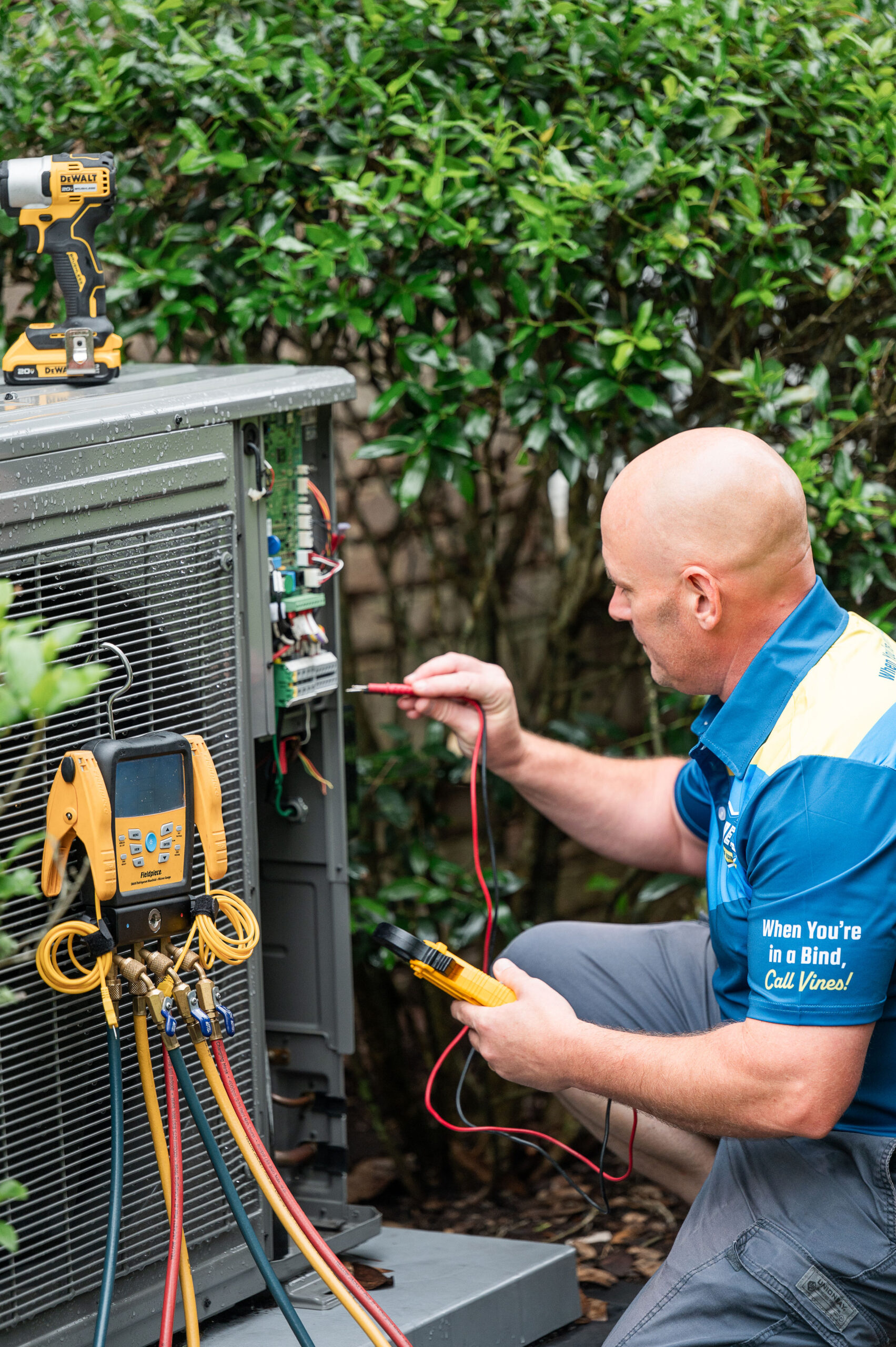
Is your home ready for the next South Carolina freeze? Do not wait for a pipe to burst or your heater to fail to get an expert opinion. The Vines team is available to perform winter health checks on your plumbing and HVAC systems. From insulating vulnerable pipes to ensuring your heat pump’s defrost cycle is working perfectly, we provide the reliable service you need.
Contact us today to schedule your maintenance and stay warm, dry, and safe all season long.
Schedule Service Today
For immediate assistance in Horry & Georgetown Counties, please call us or schedule service.